Brand Drift Prevention Tools for Distributed AI Workflows
A shared, versioned brand layer stops AI agents from drifting.

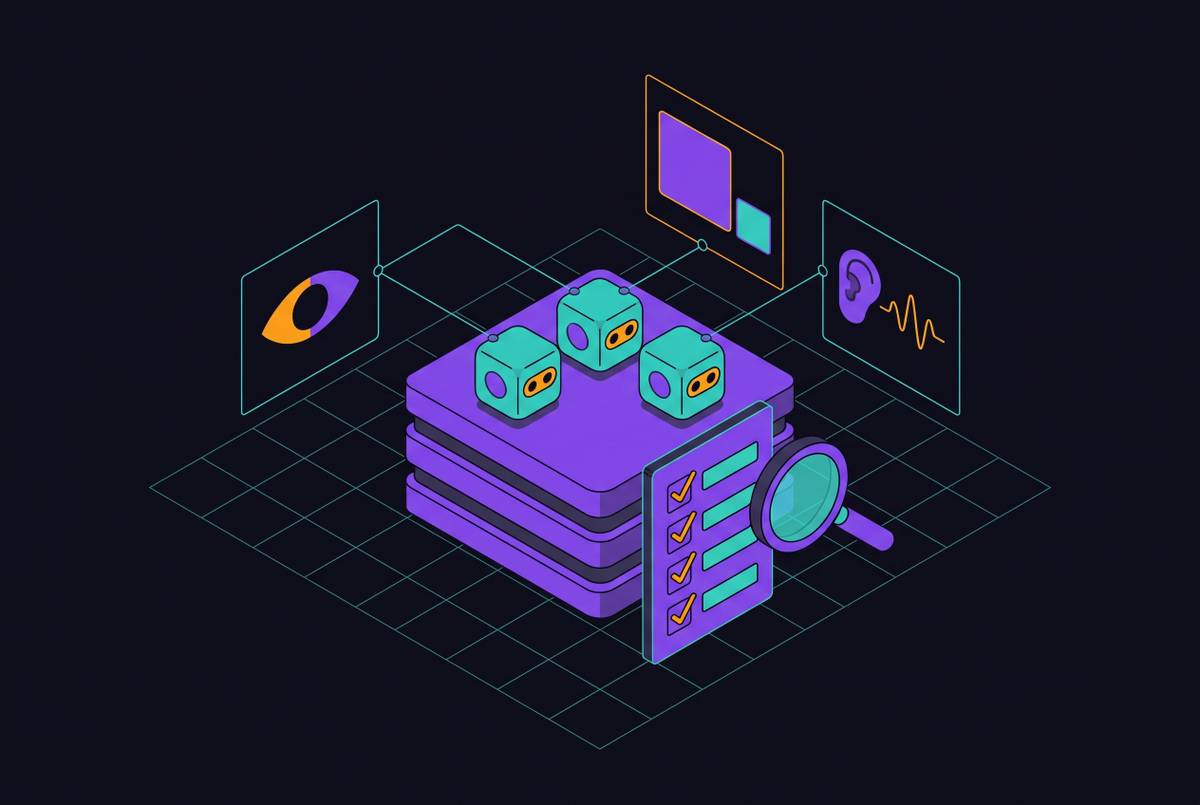
Brand drift prevention tools for distributed AI workflows work best as infrastructure. The brand layer for agents is a shared, machine-readable, versioned source of brand identity and guidelines that every connected agent can query. It keeps brand decisions consistent across tools and contributors without requiring people to reconstruct those decisions in every task prompt.
Why brand drift in distributed AI workflows is a structural problem, not a human one
AI generates output faster than most brand governance processes can review it. That gap allows off-brand work to ship before anyone notices, even when teams understand the brand and take their responsibilities seriously. The missing component is shared, authoritative context that every agent can read. Without it, each task becomes another local interpretation of the brand. More discipline cannot repair that architectural gap.
The mechanism starts with how language models generate output, sequentially from the context available at that moment. There is no persistent master plan connecting one agent’s work to another’s. Moreover, underlying models can change silently, allowing an unchanged prompt to produce different results without an edit to the instructions. Clear, specific brand rules give agents something to work from, but they have to guess when the brand’s identity is mostly in people’s heads.
How distributed AI workflows multiply the drift surface
Think of a campaign in which separate agents make copy, images, social posts, and email assets. Each agent receives its own context and has no inherent awareness of the others’ decisions. The copy agent may get the latest voice guidance while the image agent works from an older visual brief. An external agency may hold a guideline PDF that is months out of date. These are separate entry points for drift.
Platform constraints can also make work vary when people in a rush skip the steps needed to adapt it. A reviewed asset in one tool does not establish that another agent has the rules needed to adapt it. Nor does one shared style guide establish that every tool interprets it consistently. Distribution increases the number of independent interpretations as well as the number of outputs. The same campaign can fragment without anyone deliberately departing from its brief.
Autonomous agents extend that problem across sequences of work. Because they plan and execute multiple steps independently, an early context error in one asset can propagate through an entire campaign. Multi-brand operators face a further boundary problem. The same agent infrastructure must distinguish one client’s rules from another’s while preserving consistency within each brand. Access to brand information is insufficient if the agent accesses the wrong brand.
Why per-task instructions and manual review cannot scale as a fix
Better prompts and more review help with single tasks, but neither gives those tasks the shared infrastructure they lack. Per-task instructions depend on every contributor knowing and applying the full brand context correctly, every time. A successful prompt also creates no automatic way to distribute its improvements to other contributors. Tool changes introduce another break in continuity when instructions must be rebuilt for a different client.
Manual review operates at the other end of the workflow. It catches defects after generation rather than preventing the next agent from repeating them. As the queue grows, deadlines encourage skimming, while maintaining review coverage requires costs to rise with output volume. Traditional PDF guidelines make both problems worse because models cannot reliably turn documents written for human designers into rules they all follow the same way. The structural alternative is to encode those rules once and make them available before generation, with review serving as an additional quality gate.
How do multiple AI agents access the same brand identity and guidelines?
A persistent brand context layer stores authoritative rules independently of any individual agent. Every connected copy, image, video, or social agent draws from that source rather than reconstructing the brand from a task description. The agent is replaceable. The brand layer is durable. This separation allows a publishing system and brand kit to outlast a particular AI client. It also establishes a common reference without requiring identical instructions for every job.
Machine-readable context must tell agents how to act as well as describe the brand. Adjectives such as “bold, human, trustworthy” leave substantial room for interpretation because they do not specify what an agent should do. A useful rule can be followed without a clarifying question. For visual identity, design tokens set out colors, spacing, and typography as structured values. Voice guidance needs comparable specificity about how the brand should be expressed.
Versioning makes that shared reference governable over time. Templates retain a history of who changed what and when, with a previous version available for rollback. Separate sets can serve sub-brands or campaigns without collapsing their distinctions. In a connected, token-based workflow, a token update changes future assets without edits to individual prompts.
MCP as the connective layer between brand context and agents
Model Context Protocol, or MCP, gives agents a standard way to look up live brand data before they generate output. Anthropic released MCP as an open standard in November 2024. For brand workflows, its practical role is to replace copying instructions into prompts with a connection to an authoritative source. The rules remain outside the individual AI client. A compliant agent can access them through the same interface.
A brand MCP server can expose resources and prompts. Resources provide read-only information, including voice guidelines, approved asset libraries, product documentation, and color and typography specifications. Prompts provide templated instructions for describing or presenting the brand in a particular context. Both can be supplied through the connection without making each contributor assemble them from scratch.
That separation becomes useful when a team switches from ChatGPT to Claude or a custom agent. The new agent queries the same server instead of requiring the brand context to be rebuilt. For agencies, the infrastructure can maintain separate brand contexts under common management. MCP provides the connection, while the quality and specificity of the stored rules determine what that connection supplies.
What the tool categories actually do and where each one fits in the workflow
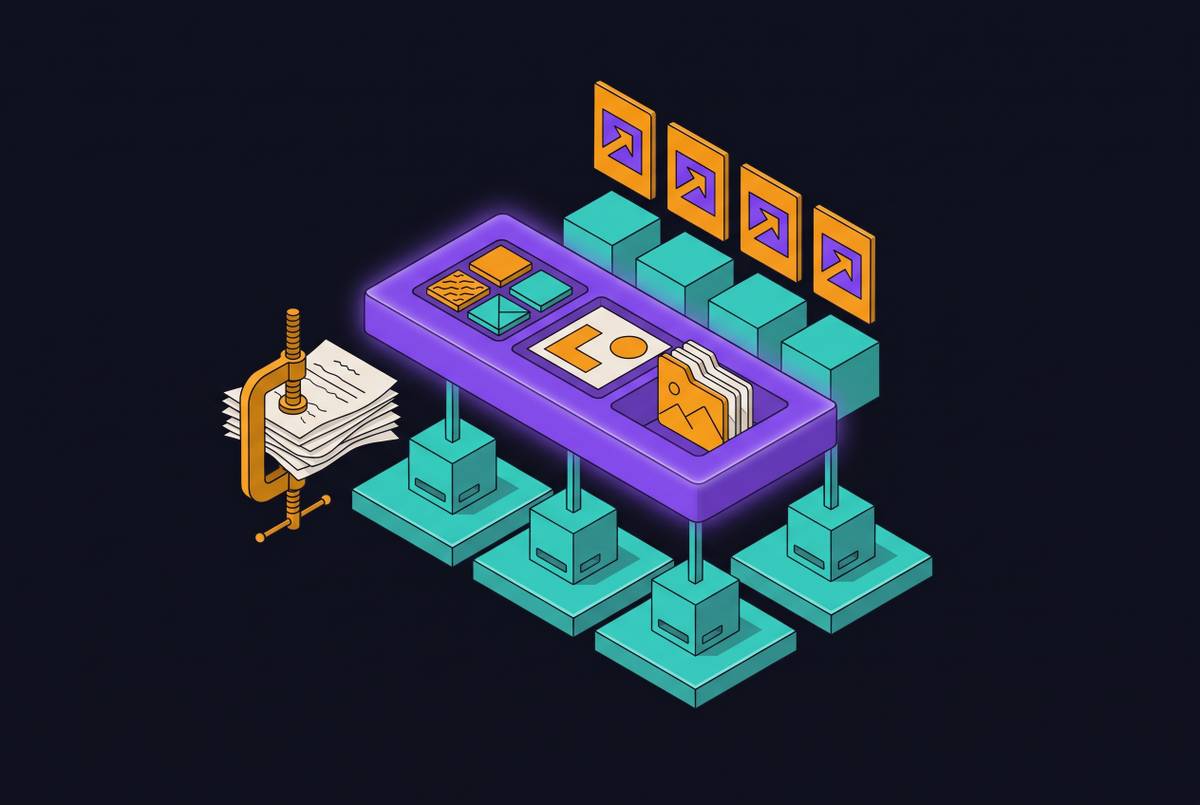
Brand context servers form the foundation layer. They store voice rules, visual tokens, logo specifications, and imagery guidelines in structured form, then serve them over MCP or an API. Their role precedes generation and spans individual tasks. The useful evaluation criterion is whether every connected agent can retrieve authoritative, current context. A server that centralizes storage but leaves agents working from disconnected copies does not complete that function, which is the gap Rainbrand, a brand layer for agents that gives agencies one shared context for every brand they manage, serves over MCP and API.
Task-specific brief generation is the scoping layer. It selects the relevant logo, type, color, imagery, and voice rules for a particular deliverable instead of supplying the whole brand context indiscriminately. An email brief and a campaign image brief can therefore share a source without containing identical instructions. Smaller, relevant briefs reduce token overhead and sharpen the task. The selection criterion is faithful scoping, with each brief preserving the applicable rules rather than becoming another independent brand definition.
AI design agents with built-in brand enforcement are the generation layer. They make assets for each channel from briefs and run brand checks before people review them. Token-based styling connects colors, spacing, and typography to shared values, while multi-format generation can produce aspect ratio adaptations, dark mode variants, and animated versions from the same on-brand source. Review remains part of the workflow. Agentmelt describes layered approval in which automated checks precede peer review for standard assets and senior review for flagship assets, allowing designers to focus on creative quality while automated checks handle color codes.
Automated brand review provides the quality gate. It examines finished copy, images, or video against specifications and supplies evidence for its findings alongside a pass or fail verdict. Visual checks can cover hex color codes and logo clear space, while broader checks look at how well the work fits the brand tone. Specificity makes correction possible. Effective evaluation therefore considers whether a finding identifies the rule and deviation clearly enough to guide another generation cycle, since approval may require multiple iterations.
How multi-agent systems maintain consistency across agents that never directly communicate
Copy and image agents can produce coherent campaign assets without a person relaying brand decisions between them. Both work from the same campaign brief and query the same underlying brand context before acting. The copy agent applies the relevant voice rules, while the image agent applies the visual specifications. Their responsibilities differ, but their authority is shared.
Role-specific agents can consequently specialize in writing, design, or scheduling without maintaining separate versions of brand knowledge. Retrieval-augmented generation grounds their work by injecting first-party sources into prompts at runtime. Those sources can include approved campaign examples, voice samples, and visual references. The mechanism replaces impressions with documented decisions. It gives each specialist the evidence it needs without making every agent take on every role.
Versioning extends this pattern across the distributed workflow. Once a brand update reaches the shared context layer, each agent receives the new version on its next query. For agencies, the same pattern requires separate context stores for separate brands. Each job directs the agent to the correct store. That boundary prevents a common infrastructure from becoming a route for cross-contamination between clients.
Keeping brand context current when the brand itself changes
A brand refresh can turn previously correct context into a source of drift. Agents that continue drawing from stale rules will keep producing the old identity, regardless of how carefully those rules were originally encoded. Versioned updates make the transition traceable. Teams can connect a changed color token or revised voice rule to a shift in output quality, and recover the previous state if the update produces unexpected results. Without clean updates, the context layer becomes infrastructure debt.
Prompt versions need the same attention as brand versions. An old prompt can interpret a new rule incorrectly even when it retrieves current context. Model changes add another risk because output can change even when neither layer has been edited. Regular output auditing against the brand baseline addresses that risk. Version history explains changes under the team’s control, but it cannot substitute for checking what the system now produces.
How to assess whether a tool is doing infrastructure work or just better prompting
For buyers, the distinction is whether a tool shares brand authority across agents or merely organizes instructions for people to reuse. A sophisticated prompt manager may store prompts well and preserve their history while still embedding the brand context inside each prompt. That helps teams manage prompts, but they still have to rely on people choosing the right library entry. Agent changes, model updates, and bypassed prompts remain points of failure. Evaluation should therefore focus on the path from authoritative rules to generated and reviewed output.
When the system checks specifications before people approve the work, it takes on routine compliance checks and leaves people to judge creative quality. Evidence-backed findings also make iteration more useful than a general score. In a vendor conversation or workflow audit, the first questions are whether brand context is stored once and served to every agent, and whether an update reaches connected agents without manual edits to each tool.
Does the tool connect through MCP or an open API, or require agents to operate inside its own closed environment? Does each review finding identify a specific rule and a specific deviation, or provide only a general verdict? Can the same infrastructure serve multiple isolated brand contexts, or does each brand require a separate instance?